

Winter crops in Ukraine under February frosts. What really matters
11 February, 2026 at 13:02
In early Feb, winter crops in Ukraine faced the lowest temperatures of the current winter, combined with strong regional contrasts in snow cover. The critical frost thresholds for developed crops are as follows:
- winter wheat at the tillering node: –16…–17°C
- winter barley: –14…–15°C
- winter rapeseed: –12…–15°C for at the root collar.
The key factor affecting frost resistance is snow cover. A 10-15 cm snow layer increases soil temperature by 10-15°C compared to air temperature. So, crops under sufficient snow, even with air temperatures of –22…–25°C, generally remain safe with high probability of successful overwintering.
Minimum temperature, early February, °C Snow cover, early February, cm
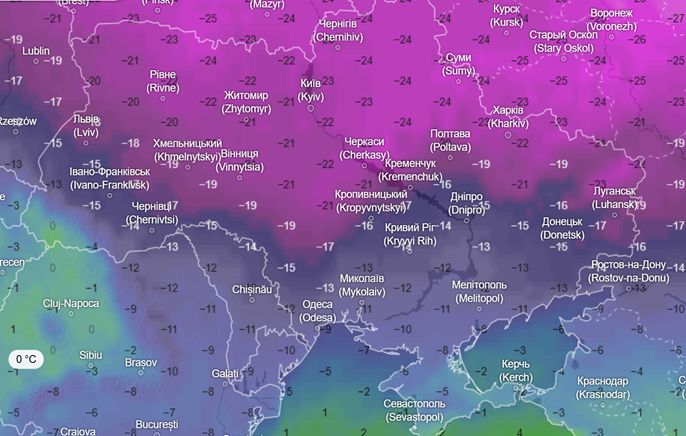
Source: ventusky.com
The highest snow was observed in the northern, western, and some parts of central regions, where air temperatures dropped to –22…–25°C but snow cover exceeded 15-20 cm. In these areas, temperatures at the tillering node stayed well above critical levels, and risks for wheat, barley, and rapeseed are assessed as low.
The situation was more challenging in the southern and central Ukraine, particularly in Odesa, Mykolaiv, Kherson, Zaporizhzhia, and locally in Dnipropetrovsk and Kirovohrad regions. Here, minimum temperatures of –14…–16°C coincided with little (0-5 cm), or no snow cover creating potentially critical conditions for winter barley and rapeseed. Fields with overgrown rapeseed, elevated root collars, or late-sown winter crops with incomplete hardening were especially vulnerable.